Meet Word’s 2026 Indigenous Curator- Frances Koncan
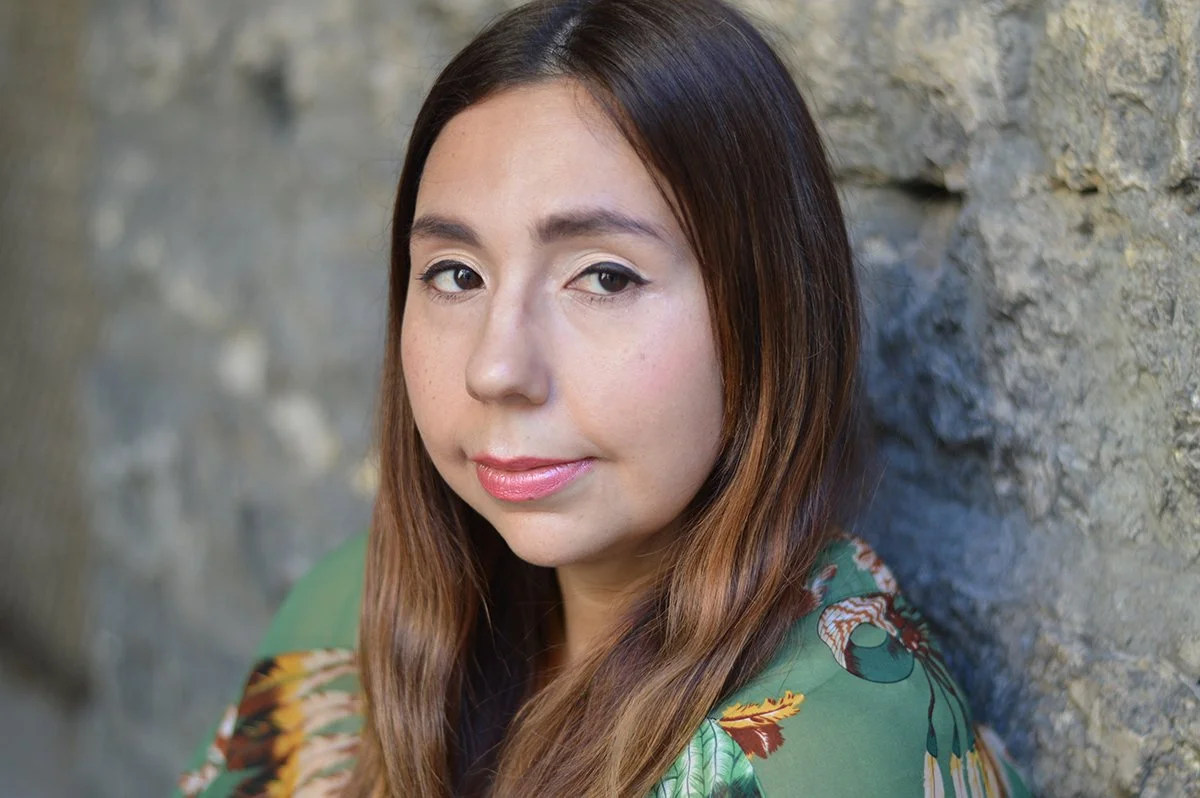
“We should have a pretty great lineup that represents a bunch of different Nations, and a big generation of different writers.”
It’s an exciting time at Word Vancouver where we get to introduce you to some new faces on the team who will be bringing you fantastic programming come this September during the festival.
With no further ado, Word Vancouver Festival is thrilled to present the 2026 Indigenous Curator - Frances Koncan.
Koncan is an Anishinaabe and Slovene playwright and theatre artist from Couchiching First Nation (Ontario). They hold an MFA in Playwriting from the City University of New York Brooklyn College.
They were the Writer-in-Residence at the Winnipeg Public Library (2022-2023) and Writer-in-Residence at the University of Manitoba (2021-2022), as well as journalist at the Winnipeg Free Press (2019-2021).
Currently, Koncan is working as an Assistant Professor at UBC”s Faculty of Arts where you can take her Creative Writing for Drama courses.
As an Assistant Professor, Koncan is consistently giving feedback and advice to their students, the one piece of advice that comes up over and over is “Be yourself. Write like yourself. Tell your story as you would tell it. That’s what’s special about your work.”
Productions of their work include Women of the Fur Trade (2023) at the Stratford Festival directed by Yvette Nolan, Women of the Fur Trade (2024) at the National Arts Centre Indigenous Theatre/Great Canadian Theatre Company directed by Renae Morriseau, Space Girl (2023) at Prairie Theatre Exchange directed by Krista Jackson, The Crows (2023) at Gwaandak Theatre directed by Miki Wolf, and Women of the Fur Trade (2020) at the Royal Manitoba Theatre Centre directed by Audrey Dwyer. Other plays include Don’t Go Into the Woods, Riot Resist Revolt Repeat, How to Talk to Human Beings, and zahgidiwin/love.
If you happen to be in the Kingston area this month, you can actually catch a production of Women of the Fur Trade at the 1000 Islands Playhouse, directed by Keith Barker.
Discussing how and why playwriting, the answer is both simple and nuanced. While attending school in New York for music originally, Koncan had a lightening bolt moment where they realized “I don’t want to be orchestra playing Mozart” and pivoted to a major in psychology and a minor in theatre. And the rest was kind of history. Proving sometimes those moments of clarity are our guarding lights.
And psychology made sense since Koncan is “obsessed with people. [She’s] nosey and [she] loves to ask people questions.” Group dynamics fascinate her. A focus on who people are and why, and bringing that to life leads to a love of characters and well crafted character driven writing, which is part of what she loves about The Pitt and fandom.
Self-assuring, they reflected out loud, “Yeah, I love – I love writing. I love just sitting in my room writing stuff. But for me, I've tried other things. I've tried to write novels so many times becauseI want to write a great novel, right? Who doesn't? And just immediately, I'm like, I need the– I NEED the actors. I need them so badly, because they just bring it to life for me, absolutely,”
And while she loves writing and needs actors to bring it to life, the appreciation goes beyond being an active participant as a playwright. While living in New York and attending school Koncan would see up to three plays a week, and that’s continued since leaving seeing upwards of 57 productions in a single year! A true theatre lover through and through.
While primarily a playwright, they have written for a couple APTN shows including That’s Awsm, a show about learning about each other through culture, among others.
Coming from Northwestern Ontario and subsequently moving to Winnipeg, MB at a young age, Koncan has been learning and building their community within Vancouver for the last three years while teaching at UBC.
When approached by Word’s Executive Director about joining the Word Vancouver team for 2026 Koncan saw it as an opportunity to grow their own community. Coming from Winnipeg which has a ‘small-town’ feeling and beginning again in Vancouver allowed for Koncan to to look at her circle based in theatre and adjacent communities that would allow her to break through the ‘sort of culture shock, even though it’s Canada’ of Vancouver while starting to “root[ing] and collect[ing] items in [her] apartment.’
Showing that the PNW freeze is alive and well in Vancouver, and for Koncan this was an experience of observation, part of what drives her love of playwriting and character explorations in their writing, which she reflected on by saying, ‘It's kind of fun, though. You know, the fun of being in different places is to see, like, how the people are and what things are strange.”
Along with growing and rooting into Vancouver's writing and arts community, Koncan is excited for her role as Indigenous Curator for 2026, “ because it is an opportunity to, share how [she] see storytelling and how [they] see writing from [her] perspective, or from like, the perspective of the people I work with, or have worked with, people from my community that maybe wouldn't be on one of these panels or in one of these conversations…”
You’ll find Koncan’s programming brings together artists who write for theater with a focus on storytelling, seeing this as an opportunity for “a fresh kind of perspective on writing and what that looks like.”
Please note: This will be a running theme through Nicola Harwood’s, Word’s 2026 Queer Curator as well, Koncan and Harwood worked closely on their panels and programming.
Discussing their Indigeneity and the impact of their personal experience and culture Koncan shared how part of their approach to writing is about cultural reclamation and reconnecting. Having a grandma who was a residential survivor, Koncan felt and saw the generational disconnect and distancing from culture that was rooted in safety and noted that their generation is pushing back by saying:
No, we're going to do these things because they're important and they're valuable, and I want to keep them alive and pass them on. So I've sort of been as an adult, like dabbling in all these different things, but I think for me, I definitely feel like my experience just being around my community influences how I tell stories a lot. I think the way they're shaped and the way they maybe deviate from what we believe. In theater we have something called the well made play, which is really rooted in Aristotle, like ancient Greek. And a lot of times when I'm writing a play, it doesn't align with that at all. And you have to really justify that, you know, to take up space on the stage. People want to know like, why are you doing this? And why is it important? And I'm like, it's because this is how we tell stories, and I want to share it in that way. So, yeah, I'd say for me, it's a lot about reclamation and a lot about coming back to things. And I'm a terrible crafts person. Like, I can't make things. For some reason, I think my thing is just, I love words. I'm pretty like, I would call myself quiet, but like, when I need to chat, I can Yap a very long time. And I think that's just my way of, like, saying, ‘Hey, I heard this story. Let me tell you now, let me pass the story on.’ I feel is my strength and hopefully what I contribute to the next generation.
Which leads into curating programming that reflects West Coast Nations and their ancestors allowing for deeply connected voices and spread across generations.
Always insightful, Koncan remarks:
Age is always a consideration. Because I think I know something that really bothered me when I was first starting out in my 20s, was that no one kind of takes you seriously…you get kind of assigned the emerging artist role, and are waiting for your time to shine, for someone to ask you to sit on a panel, or for someone to do a reading of your play. I always felt like I was just in Limbo for like a decade. So having that representation of some established writers who have, you know, done it all, seen it all, and can speak to change and how things have changed. But as well as, younger writers who are just starting and what they're seeing and what they're thinking about, was really important to me.
And at the end of the day, true to her genuine love of theatre and performing arts as a craft and mode of expression, Koncan states that, “I guess I just want people to be excited about theater”
There is so much care, insight, and genuine passion for the arts and the intersection of writing, culture, and storytelling in Koncan’s programming. Ultimately, the programming should, “ have a pretty great lineup that represents a bunch of different Nations, and a big generation of different writers.” And while it is a serious undertaking, there is a thread of joy running through each panel. A set intention to find joy through culture, history, telling stories that honour the past, that can shape and inspire the future. There is a general knowledge that while Indigenous Nations have an oppressive history in Canada (on Turtle Island) Indigenous Peoples are extremely funny. So Koncan is bringing together a great sense of community and a lot of laughter to this year’s festival.