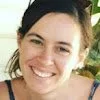
Meet Word’s 2026 Queer Curator- Nicola Harwood
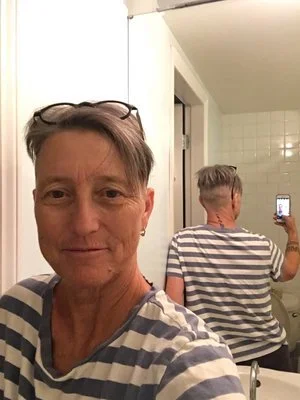
“You can’t build excellence unless you have capacity. ”
Each year at the Word Festival our team works with amazing writers from all walks of life. As our community continues to grow each year we’re thrilled when people from within the community step into new roles where we are able to learn from them in bigger ways.
All that is to say without further ado, Word Vancouver is thrilled to present the 2SLGBTQIA+/ Queer Curator for the 2026 Festival- Nicola Harwood.
Nicola was born in Kelowna, BC, Canada which lies within the unceded territories of the Syilx speaking people of the Okanagan Nation. But has lived in Victoria and San Francisco while completing their education in Creative Writing and Theatre, before making their way to Vancouver (the shared ancestral and unceded territories of the Musqueam, Squamish and Tsleil-waututh Nations).
As a queer Anglo/Gaelic Canadian artist, their background within the arts community lay within theatre, including running a theatre company. Nicola is primarily a playwright, director, and producer for theatre and her writing is rooted in and through theatre. Their work included political, feminist, and alternative work that focused on collaborative creation, queer comedy and community engaged practices. Beyond theatre work, you can pick up Nicola’s memoir “Flight Instructions for the Commitment Impaired,” about Nicola’s experience in the late nineties in San Francisco.
Recently, Nicola has been “working on a book that has been a long time in gestation- an exploration of queerness told over back and forth between a couple of kids growing up in the 60s 70s and coming into their queerness and transness and a retelling of the Joan of Arc story and also dealing with trauma and mental illness and spiritual experience and climate change. A little bit of a meditation on fire.” What you’ll find threaded through much of their work is a straddling of comedy and tragedy.
While yes, Nicola is a writer and playwright, they are also a visual artist using the mediums of painting and installation to tell stories and engage creatively with the happenings of the world.
Nicola teaches Creative Writing and Interdisciplinary Expressive Arts at Kwantlen Polytechnic University. This includes teaching in the Inside-Out Prison Exchange program which originated in Philadelphia. This is “where we bring students from campus based, students inside the institution, and they sit, they learn side by side as peers with incarcerated students.” It’s a six credit university course inside that is a mix of inside and outside students together. Previously, Nicola taught at San Francisco State University, the University of Victoria, and Selkirk College.
While Nicola joins the Word Vancouver Festival as the queer curator this year, they have been a part of the community having previously presented as a writer. Through their previous involvement as a writer and values of creative collaboration it felt like a natural fit when Nicola was invited to join the team. When reflecting on the why, Nicola expanded,
“I really like the festival. It’s a really nice community. It feels very community based and really accessible for people. And the fact that it’s free, and we’ve had a really great collaboration with KPU…with our students getting involved. It’s been a really fantastic place for them to start becoming active in the Vancouver literary community as volunteers and working at the festival. So it’s just been a really friendly relationship. And then I got to know Bonnie more personally through some of the prison teaching work and community based work that I do, and she’s involved in as well, yeah, and so she invited me to do this, so I feel really honored to be able to do this piece for her.”
Diving further into the queer programming for the 2026 Festival is the joy in being able to invite people to become a part of the community by presenting on panels and focusing on spreading that more broadly across the programming including, one of Nicola’s panels that is “going to be on kids lit, from a queer perspective, queer writers, writing for children, writing for children and teens.” Which has historically been a space that has been under developed, or as Nicola put it “Those stories for youth that certainly were not anywhere when I was growing up. And so I’m excited about that.”
Another panel will bring in writers who have responded to adversity through the creative process but coming from writers across generations, meaning this panel will be “a bit of an intergenerational chat about how we use creative process to support resiliency and recovery, and how our politics intersects with creative process and the creation of literature. So that’s going to be the other panel. And I really wanted that intergenerational talk about things, because I think there’s so much that has changed, and yet some things stay the same over many years. So I think it’ll be interesting to talk about that.”
Curating programming, especially around queer arts can be a challenge to balance representation, artistic quality, and community responsibility but Nicola made a ton of observations in working towards this kind of balance including:
I always try and just sort of figure out what's the makeup of the panel, who's being represented, who's not. It's really easy to forget that, I guess, but I've tried to be that person for a long time in terms of the work that I do with programming, and so that's that's usually a pretty clear go to as soon as I start generating ideas for stuff, is to say, ‘Okay, how are we what does it what does this look like in terms of gender, race, ethnicity,’ and all the stuff you know, how can we make sure that there's some diversity in the voices being represented. And, you know, sometimes you can't always, and I've always felt really strongly that creating capacity in relation to diversity is its really important to just keep building capacity, and that excellence comes through capacity, rather than capacity through excellence. If that makes sense, if we don't invite people to the table, we will never see the growth of that community's work, or we won't see that community's work. And so sometimes I know I've been at tables, you know, in previous times less so now, where there was struggles around that idea of excellence. And I think the and so really kind of blowing that up or breaking it down. It's like, what excellence according to who, excellence according to what can and excellence according to, you know what, set of criteria. And you can't build excellence unless you have capacity. Is how I feel. You've got to keep opening the table and inviting and opening the table, and the excellence emerges from that.
It’s remarkable to break down excellence and to find that intersection of excellence and capacity and growth within a community. Especially a community that is as large as the queer community. Nicola recognizes that there are great trans voices coming to the forefront right now and how in 2026 still, “There’s always this struggle for, within the breakdown of the queer identities, female identified people just continue to end up at the back of the room. I think it happens a little bit unconsciously within the community around who gets the microphone.” And with all these conversations identity politics can take over and begin to collapse onto itself so coming back to some great advice on how to navigate these ideas is that:
I've always felt like you got to build an island. You’ve got to build something to stand on if you're coming from a minority position or a disparaged minority position, particularly, you have to build your cohort. You have to build your community. You have to build your island to say we exist. But eventually the island gets a little boring, because you're all on there together, and, and, and I think that I'm really curious about how we create build bridges between communities and how we you know that it's that we don't keep setting up binaries.
And that’s what the hope of this programming will do. Build bridges and allow people from within and outside the community to break down the mythologies about each other. Plainly stated, Nicola hopes that audiences that are newer to queer literature are able to “take away accessibility and joy.” and to use the “time for questions and conversations” during the panels to engage beyond consumption. Along with that acknowledgement “that I think we are nurtured and find capacity through connection and community knowing we belong somewhere through a creative practice that we can understand each other and are being invited to someone's inner world.”
Leaving us with more things to think on and consider leading up and to during the festival Nicola hopes that attendees are able to keep”finding joy in darkness, and I think that queers have been good at this historically, how do we party and express ourselves and be as gay as possible under incredibly repressive regimes of power in terms of cultures that have disparaged or denigrated us.”